Highlights
Pro-Regenerative Shift
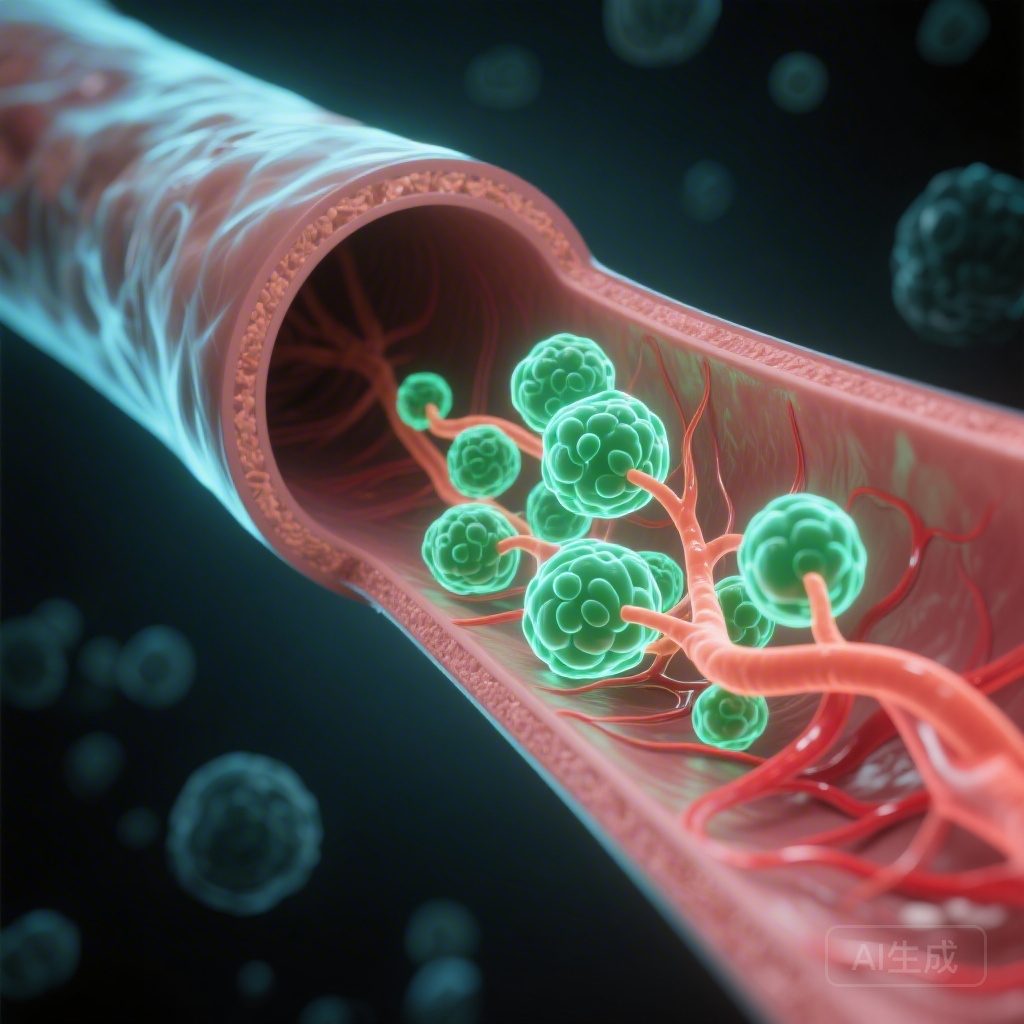
Semaglutide treatment for 6 months significantly increased circulating vascular regenerative (VR) cells, including a 66.2% increase in endothelial precursors compared to a slight decline in usual care.
Anti-Inflammatory Reprogramming
The trial observed a 50.8% reduction in pro-inflammatory granulocyte precursors (ALDHhiSSChi), particularly those expressing activation markers CD66b and CXCR2, which are implicated in plaque instability.
Systemic Cytokine Modulation
Semaglutide down-regulated serum proteins associated with tumor necrosis factor (TNF) and interleukin (IL) signaling pathways, suggesting a systemic shift toward a less inflamed state.
Novel Cardioprotective Mechanism
These findings provide a cellular and molecular basis for the cardiovascular benefits of GLP-1RAs, pointing toward improved endogenous blood vessel repair as a key therapeutic effect.
The Paradigm Shift in Cardiovascular Protection
Glucagon-like peptide-1 receptor agonists (GLP-1RAs), such as semaglutide, have fundamentally altered the management of type 2 diabetes and obesity. Beyond their primary metabolic functions, large-scale clinical trials like SUSTAIN-6 and SELECT have established their profound ability to reduce major adverse cardiovascular events (MACE). However, the precise mechanisms underlying these benefits—particularly those independent of weight loss and glycemic control—remain a subject of intense investigation.
A critical component of cardiovascular health is the body’s innate ability to repair vascular endothelium. This process is largely mediated by bone marrow-derived progenitor cells. In states of chronic metabolic stress, such as diabetes and obesity, the flux of these cells is often skewed: pro-inflammatory myeloid cells are overproduced, while vascular regenerative precursors are depleted
**Generating Article Content**
I’m now drafting the content, building out the sections: highlights, clinical context, and study methodology. I’m focusing on the primary and secondary endpoints, the role of ALDH, and the impact on myeloid progenitors. I’m also ensuring the JSON structure remains valid, including title, summary, tags, and category. I’m aiming for concise yet comprehensive coverage, while incorporating details on the SEMA-VR trial and ensuring compliance with the prescribed word count. I’m validating the JSON and content simultaneously.
. This imbalance accelerates atherosclerosis and impairs recovery from ischemic insults. The SEMA-VR CardioLink-15 trial sought to determine if semaglutide could restore this balance.
Study Design: The SEMA-VR CardioLink-15 Framework
The SEMA-VR CardioLink-15 was a randomized translational trial designed to evaluate the effect of semaglutide on the circulating levels of vascular regenerative (VR) cells. The study enrolled 46 participants who were at high risk for cardiovascular events, characterized by the presence of type 2 diabetes and/or obesity, combined with either established atherosclerotic cardiovascular disease (ASCVD) or multiple ASCVD risk factors.
Participants were randomized to receive either usual care (n = 24) or semaglutide (n = 22) for a duration of 6 months. The primary endpoint was the change from baseline in VR cell content. To achieve high precision in cell identification, the researchers utilized multi-parametric flow cytometry. This approach focused on high aldehyde dehydrogenase activity (ALDHhi), a validated marker for primitive, functional stem and progenitor cells, alongside lineage-specific cell surface markers.
Specifically, the study analyzed:
1. ALDHhiSSClow cells: A population enriched with vascular regenerative potential.
2. ALDHhiSSClowCD45+: Pan-haematopoietic myeloid progenitors.
3. ALDHhiSSClowCD34+ CD133+ CD45-: Endothelial precursors.
4. ALDHhiSSChi: Granulocyte precursors associated with inflammation.
Detailed Results: Mobilizing the Repair Machinery
After 6 months of intervention, the results revealed a striking divergence between the semaglutide and usual care groups. Semaglutide treatment led to a robust increase in several key regenerative cell populations.
Vascular Regenerative Cells
The number of ALDHhiSSClow cells increased by 34.8% in the semaglutide group, whereas the usual care group saw a negligible increase of only 0.8% (P = .036). This suggests a mobilization of the body’s cellular repair kit from the bone marrow into the circulation.
Endothelial and Myeloid Progenitors
The effect on endothelial precursors (CD34+ CD133+ CD45-) was even more pronounced, with a 66.2% increase in the semaglutide group compared to a 2.3% decrease in the usual care group (P = .037). Furthermore, pan-haematopoietic myeloid progenitors (CD45+) rose by 40.1% in those receiving semaglutide, vs. 2.8% in the control group (P = .017).
Reduction in Pro-Inflammatory Precursors
Perhaps as important as the increase in regenerative cells was the significant reduction in pro-inflammatory cells. Semaglutide treatment resulted in a 50.8% decrease in granulocyte precursors (ALDHhiSSChi), while the usual care group remained stable (+0.3%; P = .002). A deeper analysis showed that the precursors most affected were those expressing CD66b (a neutrophil activation marker) and CXCR2 (a chemokine receptor critical for neutrophil recruitment to atherosclerotic plaques).
Mechanistic Insights: Remodeling the Bone Marrow Output
The SEMA-VR CardioLink-15 trial provides evidence that semaglutide acts as a modulator of bone marrow “flux.” In high-risk patients, the bone marrow often becomes hyperactive in a maladaptive way, churning out excessive amounts of inflammatory neutrophils and monocytes—a phenomenon sometimes termed “trained immunity” or “emergency myelopoiesis.”
By suppressing the production of ALDHhiSSChi granulocyte precursors and down-regulating the CXCR2 axis, semaglutide may reduce the infiltration of inflammatory cells into the vessel wall. Simultaneously, by boosting endothelial precursors, it enhances the capacity for endothelial resurfacing and the maintenance of vascular integrity. This dual action—reducing the “attack” on the vessels while bolstering the “repair”—offers a holistic explanation for the reduced rates of myocardial infarction and stroke seen in clinical trials.
Furthermore, the proteomic analysis conducted during the study showed a significant down-regulation of serum proteins involved in TNF and Interleukin signaling. This systemic reduction in inflammatory mediators likely creates a more favorable environment for progenitor cell function and vascular health.
Expert Commentary and Clinical Implications
The findings of SEMA-VR CardioLink-15 are highly significant for clinical practice. They suggest that the benefits of GLP-1RAs are not merely a byproduct of improved glucose or weight, but represent a fundamental shift in vascular biology.
Dr. Subodh Verma, a lead investigator in the trial, has noted that the ability to promote a ‘pro-regenerative’ and ‘anti-inflammatory’ cellular profile represents a novel therapeutic frontier. For clinicians, this reinforces the use of semaglutide not just as a metabolic intervention, but as a potent vasculoprotective agent.
However, some limitations must be considered. The sample size of 46 participants, while sufficient for a translational trial, is small compared to Phase III outcomes trials. Additionally, while the change in circulating cell numbers is a strong surrogate for vascular health, further research is needed to directly link these cellular changes to the stabilization of human atherosclerotic plaques in vivo.
Conclusion
In summary, the SEMA-VR CardioLink-15 trial identifies a novel mechanism of action for semaglutide: the promotion of a pro-regenerative and anti-inflammatory progenitor cell profile. By increasing endothelial precursors and reducing inflammatory granulocyte precursors, semaglutide appears to enhance the body’s endogenous mechanisms for blood vessel repair. These findings provide a compelling biological rationale for the significant cardiovascular risk reduction associated with GLP-1RA therapy and pave the way for future studies exploring the regenerative potential of metabolic therapies.
Funding and clinicaltrials.gov
This study was supported by various research grants and institutional funds. The trial is registered at clinicaltrials.gov (Identifier: NCT04212351).
References
1. Park B, Dennis F, He AZ, et al. Semaglutide promotes bone marrow-derived progenitor cell flux towards an anti-inflammatory and pro-regenerative profile in high-risk patients: the SEMA-VR CardioLink-15 trial. European Heart Journal. 2026;47(10):1171-1182. PMID: 40886061.
2. Marso SP, et al. Semaglutide and Cardiovascular Outcomes in Patients with Type 2 Diabetes. N Engl J Med. 2016;375:1834-1844.
3. Lincoff AM, et al. Semaglutide and Cardiovascular Outcomes in Obesity without Diabetes. N Engl J Med. 2023;389:2221-2232.
4. Hess DA, et al. Selection of functional human vascular progenitors using aldehyde dehydrogenase activity. Stem Cells. 2004;22(2):233-243.