Introduction: The Paradox of Remission in Crohn’s Disease
For decades, the primary goal of treating Crohn’s disease (CD) has been the induction and maintenance of clinical remission—a state characterized by the absence of symptoms and, more recently, endoscopic evidence of mucosal healing. However, even when patients achieve what appears to be stable remission through advanced biologics and immunosuppressants, the risk of relapse remains high. This clinical reality suggests that the underlying pathophysiology of the disease is not fully resolved by immune suppression alone. A landmark study by Braun et al., published in Gastroenterology, provides a multi-omic deep dive into why this happens, revealing that despite effective suppression of the adaptive immune system, significant perturbations in diet, gut microbiota, and epithelial health persist.
Highlights
- Immune suppression in CD remission is effective at reducing adaptive T cell and innate granulocyte signatures, often reaching levels lower than those seen in healthy controls.
- Despite immune control, epithelial stress markers, specifically the antimicrobial pathway gene DUOX2 and mucin glycosylation genes, remain significantly altered.
- Patients in remission tend to consume higher levels of ultraprocessed foods (UPFs) and lower levels of fiber, folate, and Vitamin C compared to healthy individuals.
- Increased UPF consumption is directly correlated with dysbiotic microbial signals and impaired gut barrier homeostasis, potentially fueling the relapsing-remitting cycle of the disease.
The Clinical Context: Is Remission Truly ‘Healthy’?
Crohn’s disease is a chronic inflammatory condition of the gastrointestinal tract resulting from a complex interplay between genetic susceptibility, environmental factors, and an aberrant immune response to the gut microbiota. Current therapeutic strategies primarily target the immune system, such as TNF-alpha inhibitors, IL-12/23 inhibitors, and integrin antagonists. While these therapies are revolutionary, they often fail to restore the gut to a truly ‘healthy’ state. The study by Braun et al. aimed to identify the dietary and gut signals that distinguish CD remission from a healthy state, seeking to uncover therapeutic targets that could lead to deeper disease clearance.
Study Design and Multi-Omic Methodology
The researchers conducted a comprehensive analysis involving 191 subjects. This cohort included 77 patients with CD in remission, 37 with active CD, and 77 non-inflammatory bowel disease (IBD) controls who served as the reference for healthy signals. The study utilized a robust multi-omic approach, integrating data from:
- Ileal transcriptomics (gene expression in the small intestine)
- Microbiomics (composition of the gut bacteria)
- Metabolomics (metabolic byproducts)
- Dietary assessment (detailed nutritional intake records)
By comparing these diverse data sets across the three groups, the team could pinpoint exactly where the ‘remission’ state falls short of achieving the biological signatures of the healthy control group.
Key Findings: The Persistence of Pathogenic Signatures
1. Immune Suppression vs. Epithelial Stress
One of the most striking findings of the study was the ‘over-suppression’ of certain immune pathways. Ileal transcriptomics revealed that genes associated with adaptive T cells and innate granulocytes were significantly decreased in patients in remission compared to active CD patients. In fact, these levels were even lower than those observed in the non-IBD healthy controls, indicating that modern treatments are highly effective at dampening the traditional inflammatory response. However, this immune suppression did not translate to epithelial recovery. Patients in remission showed a persistent increase in the expression of epithelial antimicrobial pathways. Specifically, the gene DUOX2, which is involved in reactive oxygen species production, remained elevated. Additionally, there were significant alterations in genes associated with goblet cells and mucin glycosylation, which are critical for maintaining the protective mucus barrier of the gut.
2. The Persistent Dysbiotic Microbiome and Metabolome
While the immune system was quieted, the gut microbiome remained in a state of dysbiosis. The microbial composition of patients in remission was more similar to those with active CD than to healthy controls. This included a persistent presence of pathogenic bacteria and a lack of diversity in beneficial species. These microbial imbalances were mirrored in the metabolomic data, where metabolic signatures associated with inflammation and gut barrier dysfunction remained prevalent. This suggests that the ‘ecological’ environment of the gut does not automatically reset just because the immune system is pharmacologically suppressed.
3. The Role of Ultraprocessed Foods (UPFs)
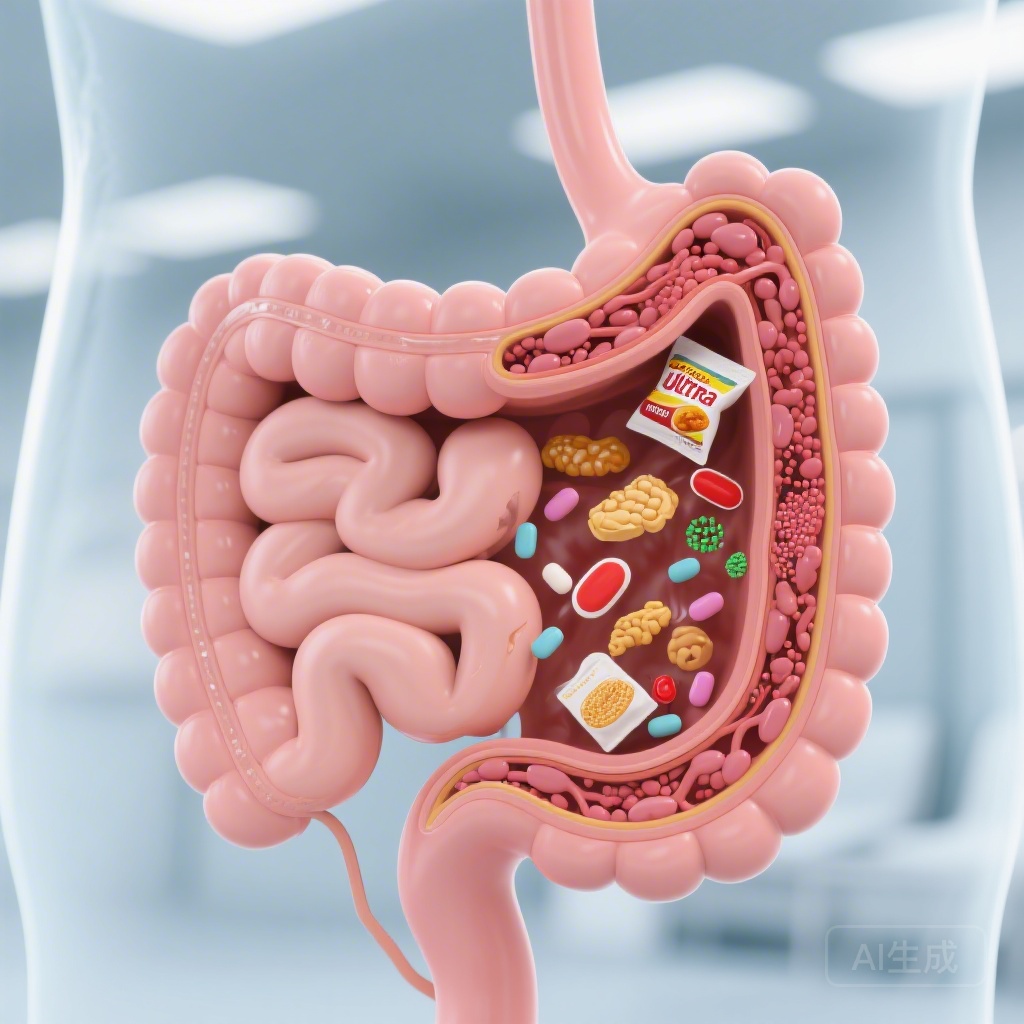
Dietary analysis revealed a troubling trend: patients in CD remission had significantly less healthy dietary habits than the control group. They consumed higher amounts of ultraprocessed foods and lower amounts of fiber, folate, Vitamin C, and vegetables. Most importantly, the researchers found a statistical link between diet and gut health. High exposure to UPFs was significantly associated with more dysbiotic gut signals. Furthermore, UPF intake negatively correlated with the expression of genes enriched for mucin glycosylation. This suggests that a diet high in UPFs may actively undermine the gut barrier, even while a patient is taking potent immunosuppressive medications.
Expert Commentary: Mechanistic Insights and Clinical Implications
The persistence of DUOX2 and the alteration of mucin glycosylation genes provide a potential mechanism for the relapsing nature of Crohn’s disease. Mucin glycosylation is essential for the structural integrity of the mucus layer; when this is compromised, the epithelium is exposed to luminal antigens and bacteria, leading to chronic low-grade stress. The finding that UPFs exacerbate this issue is clinically significant. It suggests that while biologics can ‘shut off’ the fire of active inflammation, they do not necessarily ‘rebuild the house’—the epithelial barrier and a healthy microbiome.
From a clinical perspective, these results emphasize that ‘deep remission’ should perhaps be redefined to include the normalization of epithelial and microbial signatures. For clinicians, this highlights the necessity of integrating dietary counseling into the management of CD. Reducing UPF intake and increasing fiber and micronutrient consumption may be essential adjuncts to pharmacological therapy to promote longer-lasting remission states and prevent the ‘smoldering’ inflammation that leads to future flares.
Conclusion: Moving Toward Deeper Clearance
The study by Braun et al. serves as a wake-up call for the gastroenterology community. It demonstrates that the biological perturbations of Crohn’s disease persist far beyond the resolution of clinical symptoms. Effective immune suppression is a necessary but perhaps insufficient component of long-term disease management. To achieve true disease clearance, interventions must also target the gut microbiome, epithelial health, and, crucially, the patient’s diet. Future research should focus on whether dietary interventions specifically designed to enhance mucin glycosylation and reduce epithelial stress can bridge the gap between clinical remission and true biological health.
References
Braun T, Levhar N, Efroni G, et al. Perturbations of Diet and Gut Signatures Persist During Remission in Crohn’s Disease Despite Effective Immune Suppression. Gastroenterology. 2026; (Published online March 9, 2026). PMID: 41801174.