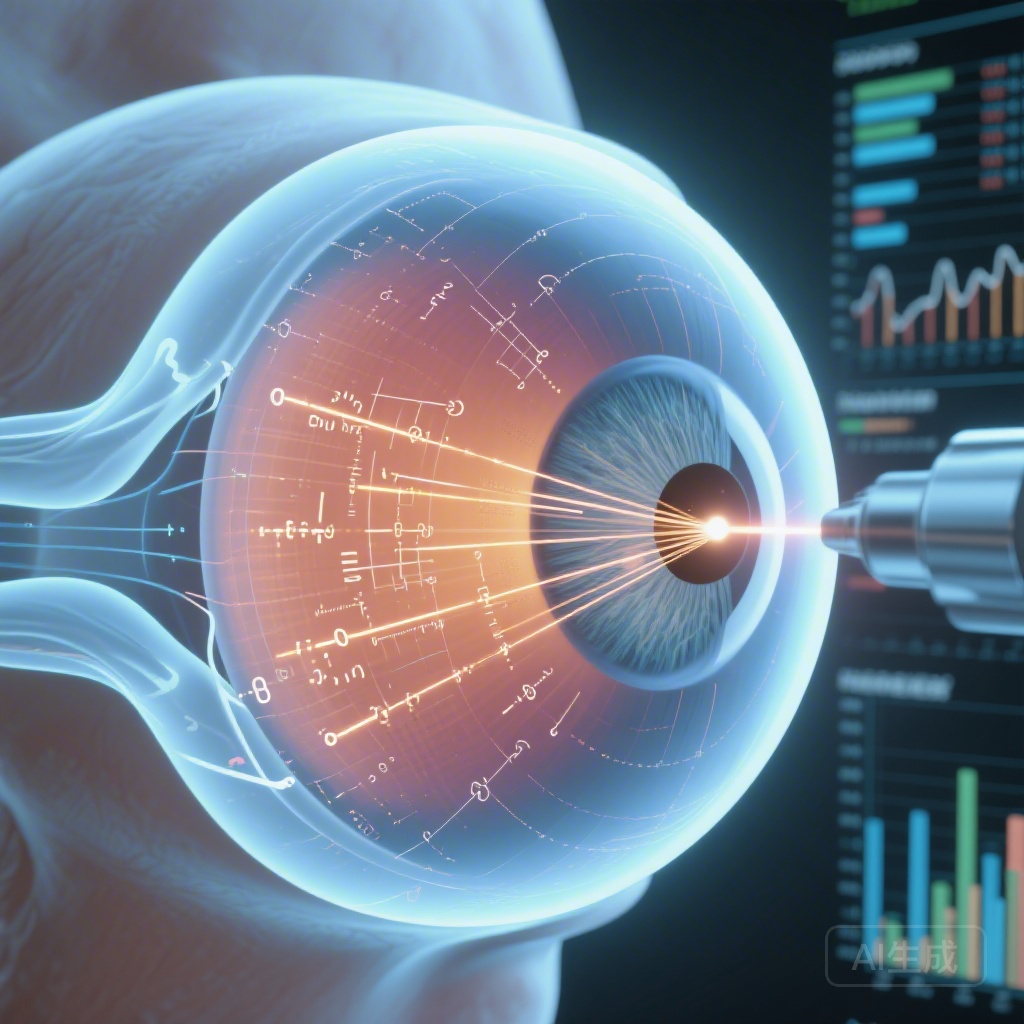
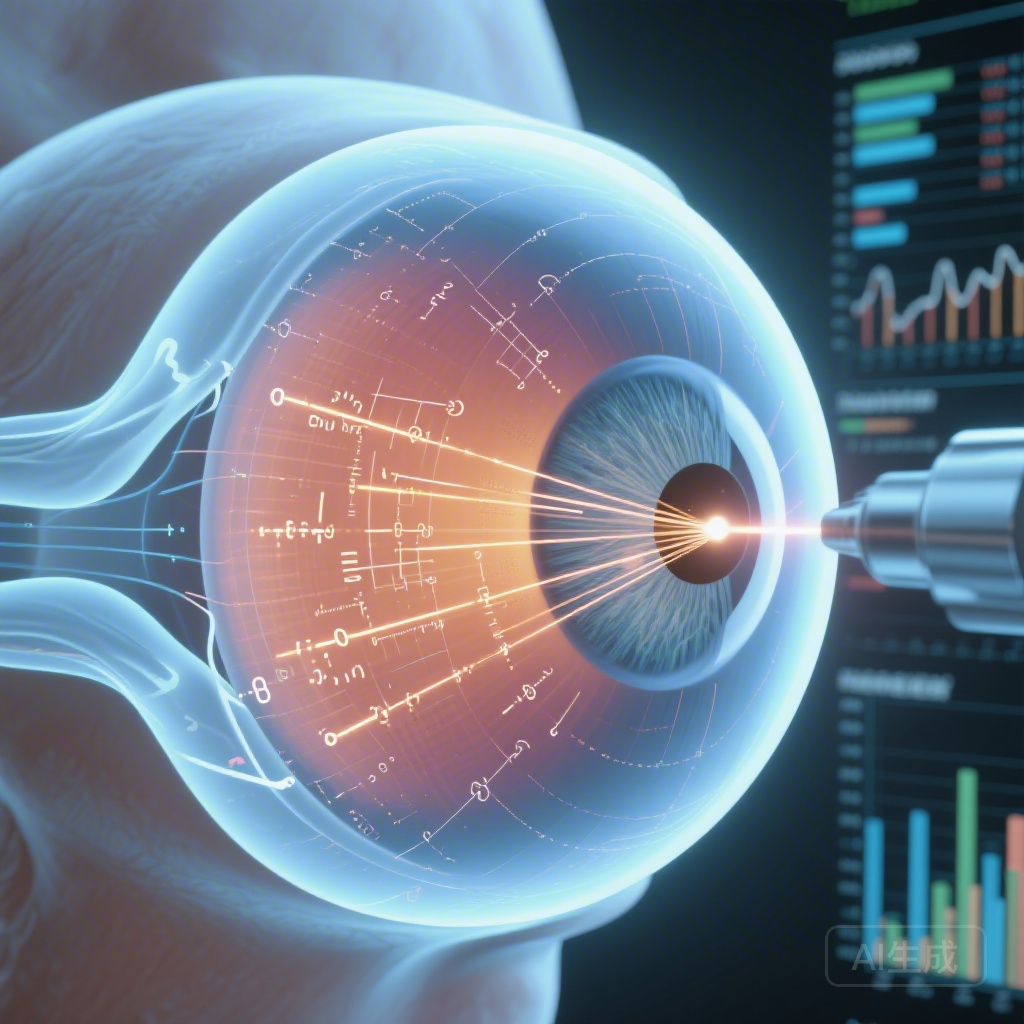
LISA MRS 公式在屈光手术后患者,尤其是高度近视患者的 IOL 计算中优于现有标准

LISA MRS 公式在屈光手术后患者,尤其是高度近视患者的 IOL 计算中优于现有标准

引言:屈光手术后眼睛日益增长的挑战

随着首批接受近视角膜屈光手术(MRS)——如 LASIK、PRK 和 SMILE 的患者逐渐进入白内障发病年龄,眼科医生面临一个重要的技术难题。为这些患者计算正确的人工晶状体(IOL)功率非常困难。传统的 IOL 公式往往会导致远视意外,这对曾经寻求摆脱眼镜的患者来说是一个令人失望的结果。

屈光手术后眼睛的不准确主要来自三个来源:角膜计数指数误差、曲率半径误差和有效晶状体位置(ELP)估计误差。标准角膜测量仅测量角膜前表面,并假设与后表面有固定关系以计算总角膜屈光力。然而,近视屈光手术改变了前表面,而后表面基本保持不变,这使得标准角膜计数指数无效。此外,许多公式使用角膜屈光力来估计 ELP;当角膜因手术变平后,公式错误地预测了更浅的 IOL 位置,导致晶状体功率不足。

研究设计:LISA MRS 公式的开发与验证

在最近发表于《美国眼科杂志》的一项研究中,研究人员开发并验证了 LISA MRS 公式,以解决这些特定问题。该研究分为两个阶段:公式开发和多中心验证。

公式开发

开发队列包括 134 名接受过近视屈光手术的患者(98 名 SMILE 和 36 名 FS-LASIK)。研究人员利用线性回归模型描述了术前角膜前表面曲率半径(ARC)与术后角膜后表面曲率半径(PRC)之间的关系。这种关系对于重建原始角膜状态以更好地估计 ELP 至关重要。最终的 LISA MRS 公式是一种厚透镜模型,利用预测的术前 ARC 和实际的 PRC 测量值(如果可用)来改进计算。

多中心验证

验证阶段涉及对三个不同临床中心的 225 名有 MRS 史的白内障患者的回顾性分析。评估了 LISA MRS 公式(有和无 PRC 数据)与五种已建立的公式(Barrett True K、Emmetropia Verifying Optical (EVO)、Haigis-L、Hoffer QST 和 Shammas PL)的性能。主要结果指标是算术预测误差、绝对预测误差以及公式性能指数(FPI)。

关键发现:准确性和一致性的优越性

验证研究的结果表明,在这一复杂患者群体中,IOL 功率预测取得了显著进展。LISA MRS 公式在测试模型中表现最佳。

公式性能指数(FPI)

FPI 是公式准确性的综合指标,LISA MRS 公式的 FPI 最高(0.43)。相比之下,Hoffer QST 达到了 0.37 的 FPI,其次是 EVO(0.32)和 Barrett True K(0.26)。这表明 LISA MRS 在各种类型的眼睛中提供了更可靠的预测。

预测误差

LISA MRS-PRC 和 EVO-PRC 的中位绝对预测误差(MedAE)最低,为 0.47 D。虽然两种公式都表现良好,但在分析轴长(AL)时,LISA MRS-PRC 显示出明显的优势。在 AL 小于 28 毫米的眼睛中,EVO-PRC 公式表现相对更好。然而,对于 AL 为 28 毫米或更大的眼睛——高度近视患者常见的场景——LISA MRS-PRC 公式保持了更高的准确性。

角膜后表面曲率半径(PRC)的作用

研究中最显著的发现之一是纳入实际角膜后表面曲率半径测量数据的影响。研究人员发现,纳入 PRC 数据显著提高了 Barrett True K、LISA MRS 和 Hoffer QST 公式的性能(所有 P < 0.05)。在屈光手术后的眼睛中,角膜后表面是唯一稳定的原始角膜曲率解剖参考。通过测量 PRC 而不是基于人群平均值进行假设,临床医生可以大幅减少角膜计数指数误差。

研究指出,术后后角膜曲率(PK)是术前 ARC 的强预测因子,R 平方值为 0.82。这种关系使 LISA MRS 公式能够有效地“反向计算”眼睛的原始状态,从而实现更精确的 ELP 估计。

临床意义和专家评论

对于临床实践,这些发现表明,LISA MRS 公式应被视为 LASIK 或 SMILE 病史患者 IOL 计算的主要工具,特别是那些高度近视和长轴长的患者。该公式在 AL ≥ 28 毫米的眼睛中保持准确性是一项关键改进,因为这些患者通常是最难计算的,且对视觉结果的期望最高。

专家评论指出,尽管 EVO-PRC 在标准长度的眼睛中是一个强有力的竞争对手,但 LISA MRS 为高度近视人群提供了特殊优势。此外,建议在可能的情况下使用 PRC 数据正在成为新的护理标准。现代扫频源光学相干断层扫描(SS-OCT)和 Scheimpflug 成像设备现在使获取 PRC 测量值变得常规化,本研究为将这些数据整合到每项屈光手术后的计算中提供了循证依据。

研究局限性

虽然结果很有希望,但研究人员指出,该研究具有回顾性性质。在更多样化的种族人群中进行前瞻性研究将进一步验证公式的普适性。此外,虽然该公式在 SMILE 和 FS-LASIK 患者中均表现良好,但开发队列中 FS-LASIK 的样本量小于 SMILE,尽管两者的角膜计数变化相当。

结论

LISA MRS 公式在屈光手术后的护理方面取得了重大进展。通过结合厚透镜模型、先进的 ELP 估计回归分析以及纳入角膜后表面数据,它为之前接受过近视矫正的白内障患者提供了高度的精度。对于外科医生而言,特别是在高度近视的眼睛中使用该公式,可以减少屈光意外的风险,提高屈光手术后白内障患者不断增长群体的满意度。

参考文献

1. Zhang J, Xie X, Yuan H, et al. Development and Validation of a New Formula for Intraocular Lens Power Calculation in Patients with Myopic Corneal Refractive Surgery. American Journal of Ophthalmology. 2026. PMID: 41819516.

2. Barrett GD. Intraocular lens calculation in eyes with prior refractive surgery. J Cataract Refract Surg. 2018;44(11):1353-1360.

3. Wang L, Koch DD. Comparison of intraocular lens power calculation methods in eyes with previous laser refractive surgery. Ophthalmology. 2021;128(11):e155-e164.


Công thức LISA MRS vượt trội hơn các tiêu chuẩn hiện tại trong việc tính toán IOL cho bệnh nhân sau phẫu thuật khúc xạ, đặc biệt là trong trường hợp cận thị nặng

Công thức LISA MRS vượt trội hơn các tiêu chuẩn hiện tại trong việc tính toán IOL cho bệnh nhân sau phẫu thuật khúc xạ, đặc biệt là trong trường hợp cận thị nặng

Giới thiệu: Thách thức ngày càng tăng của mắt sau phẫu thuật khúc xạ

Khi thế hệ đầu tiên của bệnh nhân đã trải qua phẫu thuật khúc xạ cận thị giác mạc (MRS) như LASIK, PRK và SMILE đạt đến tuổi phát triển đục thủy tinh thể, các bác sĩ nhãn khoa phải đối mặt với một rào cản kỹ thuật đáng kể. Việc tính toán độ lực thấu kính nội nhãn (IOL) chính xác cho những bệnh nhân này rất khó khăn. Các công thức IOL truyền thống thường dẫn đến sự bất ngờ viễn thị, kết quả không mong đợi cho những bệnh nhân trước đó đã tìm kiếm sự độc lập khỏi kính.

Sự không chính xác ở mắt sau phẫu thuật khúc xạ xuất phát từ ba nguồn chính: lỗi chỉ số keratometric, lỗi bán kính và lỗi ước tính vị trí thấu kính hiệu quả (ELP). Đo keratometry chuẩn chỉ đo bề mặt giác mạc phía trước và giả định mối quan hệ cố định với bề mặt phía sau để tính tổng độ lực giác mạc. Tuy nhiên, phẫu thuật khúc xạ cận thị làm thay đổi bề mặt phía trước trong khi để lại bề mặt phía sau hầu như không thay đổi, khiến các chỉ số keratometric chuẩn trở nên vô hiệu. Hơn nữa, nhiều công thức sử dụng độ lực giác mạc để ước tính ELP; khi giác mạc bị phẳng bởi phẫu thuật, công thức dự đoán sai một vị trí thấu kính nông hơn, dẫn đến thấu kính kém mạnh.

Thiết kế Nghiên cứu: Phát triển và xác nhận LISA MRS

Trong một nghiên cứu gần đây được công bố trên Tạp chí Nhãn khoa Hoa Kỳ, các nhà nghiên cứu đã phát triển và xác nhận công thức LISA MRS để giải quyết những thách thức cụ thể này. Nghiên cứu được cấu trúc thành hai giai đoạn: phát triển công thức và xác nhận đa trung tâm.

Phát triển Công thức

Nhóm phát triển bao gồm 134 bệnh nhân đã trải qua phẫu thuật khúc xạ cận thị (98 SMILE và 36 FS-LASIK). Các nhà nghiên cứu đã sử dụng mô hình hồi quy tuyến tính để mô tả mối quan hệ giữa bán kính giác mạc phía trước trước phẫu thuật (ARC) và bán kính giác mạc phía sau sau phẫu thuật (PRC). Mối quan hệ này rất quan trọng để tái tạo trạng thái giác mạc ban đầu, giúp ước tính ELP tốt hơn. Kết quả là công thức LISA MRS là mô hình thấu kính dày sử dụng ARC dự đoán trước phẫu thuật và, khi có sẵn, các phép đo PRC thực tế để tinh chỉnh tính toán.

Xác nhận Đa Trung Tâm

Giai đoạn xác nhận bao gồm phân tích hồi cứu 225 bệnh nhân đục thủy tinh thể đã từng trải qua MRS tại ba trung tâm lâm sàng khác nhau. Hiệu suất của công thức LISA MRS (có và không có dữ liệu PRC) được so sánh với năm công thức đã thiết lập: Barrett True K, Emmetropia Verifying Optical (EVO), Haigis-L, Hoffer QST và Shammas PL. Các biện pháp kết quả chính là lỗi dự đoán cộng và tuyệt đối, cũng như Chỉ số Hiệu suất Công thức (FPI).

Kết quả Chính: Sự vượt trội về Độ chính xác và Sự nhất quán

Kết quả của nghiên cứu xác nhận cho thấy một bước tiến đáng kể trong việc dự đoán độ lực thấu kính IOL cho nhóm bệnh nhân phức tạp này. Công thức LISA MRS thể hiện hiệu suất tổng thể cao nhất trong số các mô hình đã thử nghiệm.

Chỉ số Hiệu suất Công thức (FPI)

FPI, một thước đo tổng hợp về độ chính xác công thức, cao nhất cho công thức LISA MRS (0.43). So sánh, Hoffer QST đạt FPI 0.37, tiếp theo là EVO (0.32) và Barrett True K (0.26). Điều này cho thấy LISA MRS cung cấp dự đoán đáng tin cậy hơn trên một phạm vi rộng các loại mắt.

Lỗi Dự đoán

LISA MRS-PRC và EVO-PRC cho thấy lỗi dự đoán tuyệt đối trung bình (MedAE) thấp nhất ở 0.47 D. Mặc dù cả hai công thức đều hoạt động tốt, nhưng lợi thế rõ ràng xuất hiện khi phân tích chiều dài trục (AL). Ở mắt có AL dưới 28 mm, công thức EVO-PRC hoạt động tương đối tốt hơn. Tuy nhiên, đối với mắt có AL 28 mm trở lên—một tình huống phổ biến ở bệnh nhân cận thị nặng—công thức LISA MRS-PRC duy trì độ chính xác vượt trội.

Vai trò của Bán kính Giác mạc Sau (PRC)

Một trong những phát hiện quan trọng nhất của nghiên cứu là tác động của việc đưa vào các phép đo bán kính giác mạc sau thực tế. Các nhà nghiên cứu phát hiện rằng việc đưa vào dữ liệu PRC đã cải thiện đáng kể hiệu suất của các công thức Barrett True K, LISA MRS và Hoffer QST (tất cả P < 0.05). Ở mắt sau phẫu thuật khúc xạ, giác mạc sau vẫn là tham chiếu giải phẫu ổn định duy nhất cho độ cong giác mạc ban đầu. Bằng cách đo PRC thay vì giả định dựa trên trung bình dân số, các bác sĩ có thể giảm đáng kể lỗi chỉ số keratometric.

Nghiên cứu lưu ý rằng keratometry sau phẫu thuật (PK) là một dự đoán mạnh mẽ của ARC trước phẫu thuật, với giá trị R-squared là 0.82. Mối quan hệ này cho phép công thức LISA MRS hiệu quả ‘tính ngược’ trạng thái ban đầu của mắt, dẫn đến ước tính ELP chính xác hơn.

Ý nghĩa Lâm sàng và Nhận xét Chuyên gia

Đối với thực hành lâm sàng, những phát hiện này cho thấy công thức LISA MRS nên được coi là công cụ chính để tính toán IOL cho bệnh nhân có tiền sử LASIK hoặc SMILE, đặc biệt là những người có cận thị nặng và chiều dài trục dài. Khả năng của công thức duy trì độ chính xác ở mắt có AL ≥ 28 mm là một cải tiến quan trọng, vì những bệnh nhân này thường khó tính toán nhất và có kỳ vọng cao nhất về kết quả thị lực.

Nhận xét chuyên gia nhấn mạnh rằng mặc dù EVO-PRC là một đối thủ mạnh mẽ cho mắt có chiều dài trung bình, LISA MRS cung cấp lợi thế chuyên biệt cho nhóm bệnh nhân cận thị nặng. Ngoài ra, khuyến nghị sử dụng dữ liệu PRC mỗi khi có sẵn đang trở thành tiêu chuẩn chăm sóc mới. Các thiết bị hình ảnh tomography quang học quét (SS-OCT) và Scheimpflug hiện đại đã khiến việc thu thập dữ liệu PRC trở nên thường xuyên, và nghiên cứu này cung cấp bằng chứng khoa học để tích hợp dữ liệu đó vào mọi tính toán sau phẫu thuật khúc xạ.

Hạn chế Nghiên cứu

Mặc dù kết quả hứa hẹn, các nhà nghiên cứu lưu ý rằng nghiên cứu mang tính hồi cứu. Các nghiên cứu triển vọng trên các dân tộc đa dạng hơn sẽ xác nhận thêm khả năng tổng quát hóa của công thức. Ngoài ra, mặc dù công thức hoạt động tốt cho cả bệnh nhân SMILE và FS-LASIK, kích thước mẫu của FS-LASIK trong nhóm phát triển nhỏ hơn so với SMILE, mặc dù thay đổi keratometry tương tự nhau giữa hai thủ tục.

Kết luận

Công thức LISA MRS đại diện cho một bước tiến đáng kể trong chăm sóc sau phẫu thuật khúc xạ. Bằng cách kết hợp mô hình thấu kính dày với hồi quy tiên tiến để ước tính ELP và đưa vào dữ liệu giác mạc sau, nó cung cấp độ chính xác cao cho bệnh nhân đục thủy tinh thể đã từng trải qua sửa chữa cận thị. Đối với các bác sĩ phẫu thuật, sử dụng công thức này—đặc biệt là ở mắt cận thị nặng—có thể giảm nguy cơ bất ngờ khúc xạ và cải thiện sự hài lòng của bệnh nhân trong nhóm đục thủy tinh thể sau phẫu thuật khúc xạ đang tăng.

Tài liệu tham khảo

1. Zhang J, Xie X, Yuan H, et al. Phát triển và Xác nhận Một Công thức Mới để Tính toán Độ lực Thấu kính Nội nhãn ở Bệnh nhân Đã trải qua Phẫu thuật Khúc xạ Cận thị. American Journal of Ophthalmology. 2026. PMID: 41819516.

2. Barrett GD. Tính toán Thấu kính Nội nhãn ở Mắt Đã trải qua Phẫu thuật Khúc xạ. J Cataract Refract Surg. 2018;44(11):1353-1360.

3. Wang L, Koch DD. So sánh Các Phương pháp Tính toán Độ lực Thấu kính Nội nhãn ở Mắt Đã trải qua Phẫu thuật Khúc xạ Laser. Ophthalmology. 2021;128(11):e155-e164.

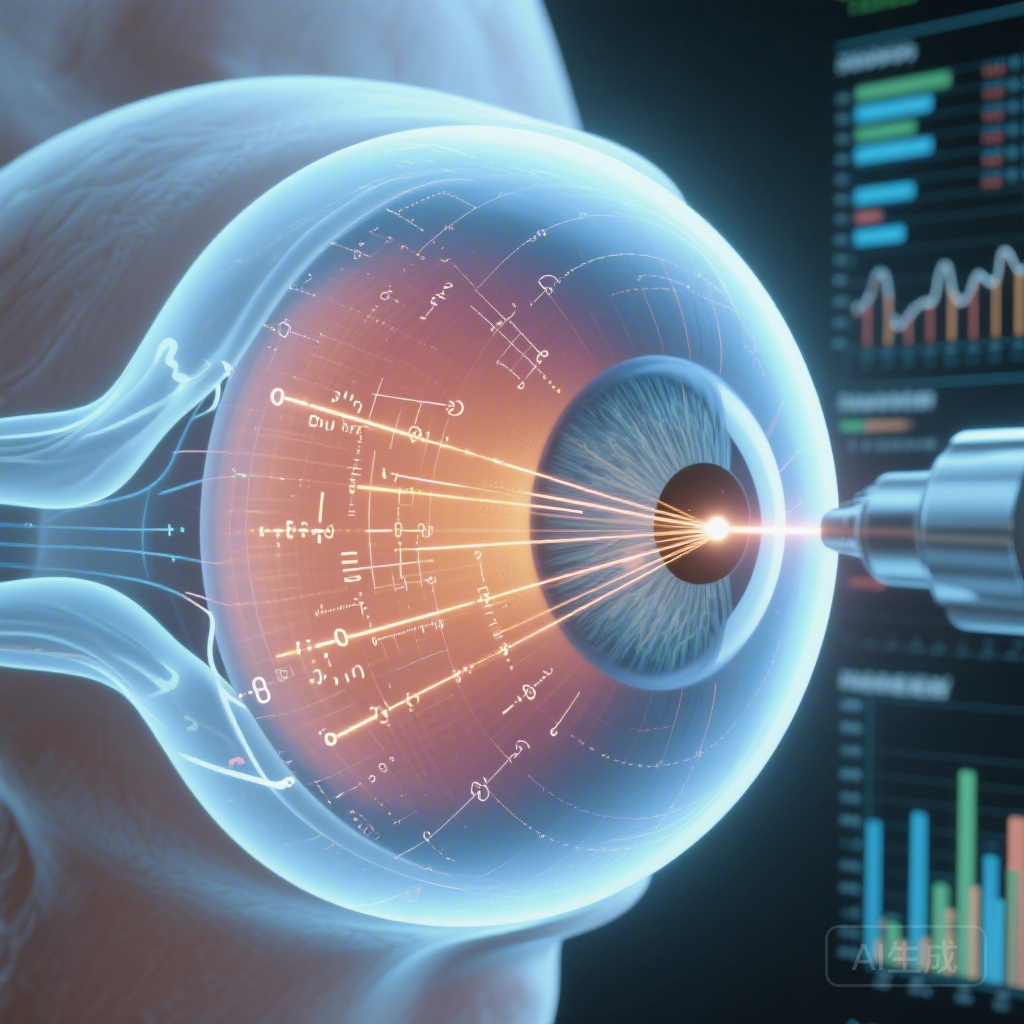
LISA MRS Formula Outperforms Existing Standards for IOL Calculation in Post-Refractive Surgery Patients, Especially in High Myopia

LISA MRS Formula Outperforms Existing Standards for IOL Calculation in Post-Refractive Surgery Patients, Especially in High Myopia

Introduction: The Growing Challenge of the Post-Refractive Eye

As the first generations of patients who underwent myopic corneal refractive surgery (MRS)—such as LASIK, PRK, and SMILE—reach the age of cataract development, ophthalmologists face a significant technical hurdle. Calculating the correct intraocular lens (IOL) power for these patients is notoriously difficult. Traditional IOL formulas often result in a hyperopic surprise, a disappointing outcome for patients who previously sought spectacle independence.

The inaccuracy in post-refractive eyes stems from three primary sources: the keratometric index error, the radius error, and the effective lens position (ELP) estimation error. Standard keratometry measures only the anterior corneal surface and assumes a fixed relationship with the posterior surface to calculate total corneal power. However, myopic refractive surgery alters the anterior surface while leaving the posterior surface largely unchanged, rendering standard keratometric indices invalid. Furthermore, many formulas use corneal power to estimate the ELP; when the cornea is flattened by surgery, the formula incorrectly predicts a shallower IOL position, leading to an underpowered lens.

Study Design: The Development and Validation of LISA MRS

In a recent study published in the American Journal of Ophthalmology, researchers developed and validated the LISA MRS formula to address these specific challenges. The study was structured in two phases: formula development and multi-center validation.

Formula Development

The development cohort included 134 patients who had undergone myopic refractive surgery (98 SMILE and 36 FS-LASIK). Researchers utilized a linear regression model to characterize the relationship between preoperative anterior corneal radius (ARC) and postoperative posterior corneal radius (PRC). This relationship is crucial for reconstructing the original corneal state to better estimate the ELP. The resulting LISA MRS formula is a thick-lens model that utilizes predicted preoperative ARC and, when available, actual PRC measurements to refine the calculation.

Multi-center Validation

The validation phase involved a retrospective analysis of 225 cataract patients with prior MRS across three different clinical centers. The performance of the LISA MRS formula (both with and without PRC data) was compared against five established formulas: Barrett True K, Emmetropia Verifying Optical (EVO), Haigis-L, Hoffer QST, and Shammas PL. The primary outcome measures were the arithmetic and absolute prediction errors, as well as the Formula Performance Index (FPI).

Key Findings: Superiority in Accuracy and Consistency

The results of the validation study suggest a significant advancement in IOL power prediction for this complex patient population. The LISA MRS formula demonstrated the highest overall performance among the tested models.

Formula Performance Index (FPI)

The FPI, a composite measure of formula accuracy, was highest for the LISA MRS formula (0.43). In comparison, the Hoffer QST achieved an FPI of 0.37, followed by EVO (0.32), and Barrett True K (0.26). This indicates that LISA MRS provides a more reliable prediction across a broad range of eye types.

Prediction Errors

LISA MRS-PRC and EVO-PRC yielded the lowest median absolute prediction error (MedAE) at 0.47 D. While both formulas performed well, a distinct advantage emerged when analyzing axial length (AL). In eyes with an AL less than 28 mm, the EVO-PRC formula performed relatively better. However, for eyes with an AL of 28 mm or greater—a common scenario in highly myopic patients—the LISA MRS-PRC formula maintained superior accuracy.

The Role of Posterior Corneal Radius (PRC)

One of the study’s most significant findings was the impact of incorporating actual posterior corneal radius measurements. The researchers found that including PRC data significantly improved the performance of the Barrett True K, LISA MRS, and Hoffer QST formulas (all P < 0.05). In the post-refractive eye, the posterior cornea remains the only stable anatomical reference for the original corneal curvature. By measuring the PRC rather than assuming it based on a population average, clinicians can drastically reduce the keratometric index error.

The study noted that postoperative posterior keratometry (PK) was a strong predictor of preoperative ARC, with an R-squared value of 0.82. This relationship allowed the LISA MRS formula to effectively ‘back-calculate’ the eye’s original state, leading to a more precise ELP estimation.

Clinical Implications and Expert Commentary

For clinical practice, these findings suggest that the LISA MRS formula should be considered a primary tool for IOL calculation in patients with a history of LASIK or SMILE, particularly those with high myopia and long axial lengths. The ability of the formula to maintain accuracy in eyes with AL ≥ 28 mm is a critical improvement, as these patients are often the most difficult to calculate for and have the highest expectations for visual outcomes.

Expert commentary highlights that while the EVO-PRC is a strong contender for standard-length eyes, the LISA MRS provides a specialized advantage for the high-myope demographic. Furthermore, the recommendation to use PRC data whenever available is becoming the new standard of care. Modern swept-source optical coherence tomography (SS-OCT) and Scheimpflug imaging devices now make obtaining PRC measurements routine, and this study provides the evidence-based justification for integrating that data into every post-refractive calculation.

Study Limitations

While the results are promising, the researchers noted that the study was retrospective in nature. Prospective studies across more diverse ethnic populations would further validate the formula’s generalizability. Additionally, while the formula performed well for both SMILE and FS-LASIK patients, the sample size for FS-LASIK in the development cohort was smaller than that for SMILE, though the changes in keratometry were comparable between the two procedures.

Conclusion

The LISA MRS formula represents a significant step forward in refractive surgery aftercare. By combining a thick-lens model with advanced regression for ELP estimation and incorporating posterior corneal data, it provides a high degree of precision for cataract patients who have previously undergone myopic correction. For surgeons, utilizing this formula—especially in highly myopic eyes—can reduce the risk of refractive surprises and improve patient satisfaction in the growing post-refractive cataract population.

References

1. Zhang J, Xie X, Yuan H, et al. Development and Validation of a new Formula for Intraocular Lens Power Calculation in Patients with Myopic Corneal Refractive Surgery. American Journal of Ophthalmology. 2026. PMID: 41819516.

2. Barrett GD. Intraocular lens calculation in eyes with prior refractive surgery. J Cataract Refract Surg. 2018;44(11):1353-1360.

3. Wang L, Koch DD. Comparison of intraocular lens power calculation methods in eyes with previous laser refractive surgery. Ophthalmology. 2021;128(11):e155-e164.
Comments

No comments yet. Why don’t you start the discussion?

发表回复