引言:糖尿病肾病的精准需求
2型糖尿病(T2D)背景下的慢性肾病(CKD)仍然是一个重要的全球健康负担。尽管钠-葡萄糖共转运蛋白2(SGLT2)抑制剂的变革性影响,临床医生仍然面临识别哪些患者有快速进展的最高风险以及哪些患者从治疗中获益最多的问题。传统指标,如估算的肾小球滤过率(eGFR)和尿白蛋白与肌酐比值(UACR),虽然基础性,但往往无法捕捉到肾脏损伤和炎症的潜在分子病理生理。
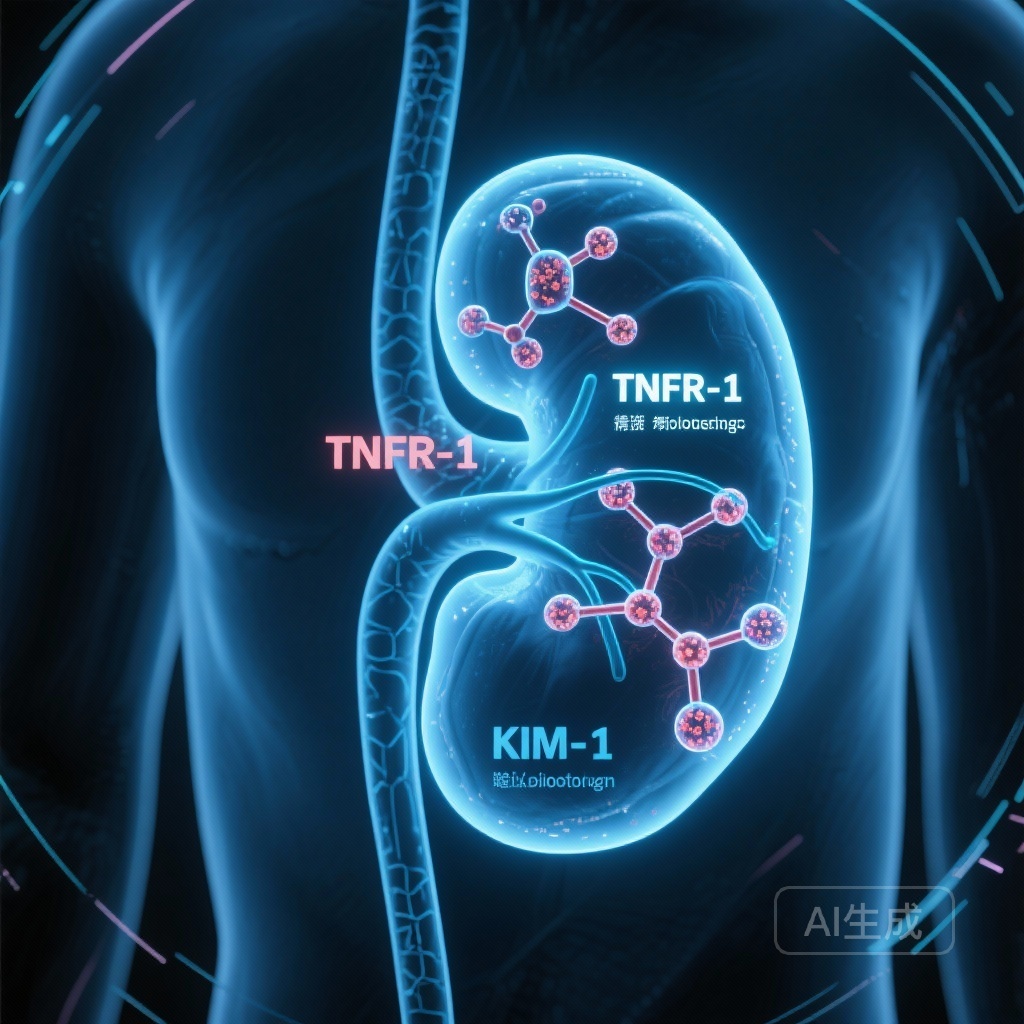
这种预后和监测能力的缺口导致了kidneyintelX.dkd的发展,这是一种基于生物标志物的风险评分,整合了肿瘤坏死因子受体-1(TNFR-1)、TNFR-2和肾脏损伤分子-1(KIM-1)与临床数据。最近对CANVAS和CREDENCE试验的分析提供了强有力的证据,表明该评分在传统Kidney Disease Improving Global Outcomes (KDIGO) 风险分类之外具有临床效用。
研究设计和方法
该研究利用了两个里程碑式的随机对照试验中的存档血浆样本:Canagliflozin心血管评估研究(CANVAS)和Canagliflozin在糖尿病合并已确诊肾病患者的肾脏事件临床评估(CREDENCE)。研究人员评估了2,954名CKD分期为G1至G3b的参与者。
主要目标是评估基线时kidneyintelX.dkd评分的预后效用及其一年后的纵向变化。复合肾脏结局包括持续40%的eGFR下降、肾功能衰竭(透析、移植或持续eGFR <15 mL/min/1.73 m²)或因肾脏相关原因死亡。该研究还检查了该评分对卡格列净治疗的反应与安慰剂相比的变化,以及这些变化是否与未来的临床结果相关。
关键发现:更优的风险分层
在基线时,kidneyintelX.dkd评分将参与者分为三个风险等级:低(26.0%)、中(44.7%)和高(29.4%)。结果显示,评分与肾脏结局之间存在明显的对数线性关系。具体而言,基线时kidneyintelX.dkd评分每增加一倍,复合肾脏结局的风险增加2.20倍(95% CI 1.72–2.82)。
Table 1. Baseline characteristics of the total population and subgroups defined by kidneyintelX.dkd risk category
| Characteristic | Total | Low risk | Moderate risk | High risk |
|---|---|---|---|---|
| Participants, n | 2,954 | 767 | 1,320 | 867 |
| KidneyintelX.dkd | 0.17 [0.10; 0.34] | 0.09 [0.09; 0.10] | 0.16 [0.12; 0.21] | 0.44 [0.36; 0.50] |
| HbA1c, % | 8.24 (1.19) | 8.03 (0.85) | 8.27 (1.23) | 8.38 (1.34) |
| Systolic blood pressure, mmHg | 140 (16.0) | 138 (15.5) | 139 (15.6) | 143 (16.5) |
| BMI, kg/m2 | 32.1 (6.05) | 32.6 (6.18) | 32.0 (5.85) | 31.8 (6.22) |
| History of CVD, yes | 1,616 (54.7) | 431 (56.2) | 717 (54.3) | 468 (54.0) |
| RAAS inhibition, yes | 848 (85.0) | 505 (84.6) | 300 (86.7) | 43 (78.2) |
| UACR, mg/g | 518 [124; 1,231] | 57.4 [26.4; 161] | 502 [255; 786] | 1,718 [1,106; 2,710] |
| Normoalbuminuria (<30 mg/g) | 268 (9.07) | 198 (25.8) | 69 (5.23) | 1 (0.12) |
| Microalbuminuria (30–300 mg/g) | 806 (27.3) | 484 (63.1) | 312 (23.6) | 10 (1.15) |
| Macroalbuminuria (>300 mg/g) | 1,880 (63.6) | 85 (11.1) | 939 (71.1) | 856 (98.7) |
| eGFR, mL/min/1.73 m2 | 61.8 (19.1) | 70.1 (19.1) | 62.0 (18.1) | 54.2 (17.3) |
| <60 mL/min/1.73 m2 | 1,514 (51.3) | 300 (39.1) | 643 (48.7) | 571 (65.9) |
| ≥60 mL/min/1.73 m2 | 1,440 (48.7) | 467 (60.9) | 677 (51.3) | 296 (34.1) |
| KDIGO risk | ||||
| Low | 808 (27.4) | 590 (76.9) | 218 (16.5) | 0 (0.00) |
| Moderate | 1,050 (35.5) | 134 (17.5) | 617 (46.7) | 299 (34.5) |
| High | 1,096 (37.1) | 43 (5.61) | 485 (36.7) | 568 (65.5) |
| KIM-1, pg/mL | 231 [133; 420] | 108 [79.0; 144] | 226 [162; 311] | 555 [385; 820] |
| TNFR1, pg/mL | 3,662 [2,826; 4,783] | 2,816 [2,334; 3,442] | 3,639 [2,913; 4,596] | 4,845 [3,827; 5,982] |
| TNFR2, pg/mL | 13,836 [10,632; 18,157] | 10,634 [8,555; 13,035] | 13,643 [10,781; 17,689] | 18,095 [14,524; 22,348] |
与既定的KDIGO风险类别直接比较时,kidneyintelX.dkd表现出更高的精确度。分类净重新分类分析显示总净重新分类指数(NRI)为21.5%。这一改进是由正确识别最终经历事件的高风险患者和未经历事件的低风险患者驱动的。实际上,这相当于每1,000名患者中有大约78名额外被正确重新分类,而不仅仅是使用KDIGO标准。
纵向监测和治疗反应
这项研究最具有临床意义的发现之一是kidneyintelX.dkd对治疗干预的响应性。在一年时,接受卡格列净治疗的参与者其kidneyintelX.dkd评分显著降低,而安慰剂组则没有。
此外,这些纵向变化预示着未来风险。一年时kidneyintelX.dkd评分每减少一个标准差,随后的复合肾脏结局风险显著降低(HR 1.56;95% CI 1.28–1.90)。重要的是,即使在调整eGFR和UACR的变化后,这种关联仍然显著,表明生物标志物评分捕捉到了传统临床指标无法看到的治疗反应。

Fig 1. Association between baseline kidneyintelX.dkd and composite kidney outcome analyzed on a continuous scale. Dotted lines represent median kidneyintelX.dkd for each KDIGO risk classification (from left to right: low, moderate, high).

Fig 2. Risk for composite kidney outcome stratified by kidneyintelX.dkd across KDIGO risk strata and joint kidneyintelX.dkd and KDIGO risk classification. A: Association is shown between baseline kidneyintelX.dkd risk strata and the composite kidney outcome (40% eGFR decline, kidney failure, or renal death), across baseline KDIGO risk categories. B: Association is shown three-dimensionally between baseline kidneyintelX.dkd and KDIGO risk strata and the composite kidney outcome.

Fig 3. Association between change in kidneyintelX.dkd from baseline to year 1 and composite kidney outcome analyzed on a continuous scale and the distribution of changes by treatment group. Dotted lines represent changes of −25%,−10%, 10%, and 25%, respectively. Association is shown continuously between the change in kidneyintelX.dkd and the composite kidney outcome (40% eGFR decline, kidney failure, or renal death), adjusted for log-transformed kidneyintelX.dkd at baseline.
单个生物标志物性能
该研究还剖析了三个生物标志物的个别贡献。在基线时,每个标准差增加的危害比分别为:
TNFR-1:1.80(95% CI 1.51–2.14)
TNFR-2:1.71(95% CI 1.45–2.02)
KIM-1:1.93(95% CI 1.67–2.23)
虽然单个生物标志物是强预测因子,但综合的kidneyintelX.dkd评分始终显示出与肾脏结局稍强的关联,突显了多标志物方法的价值,该方法同时考虑了炎症(TNFR-1/2)和小管损伤(KIM-1)。
专家评论:机制洞察和临床意义
kidneyintelX.dkd优于KDIGO分类的能力源于其关注活跃的生物学过程。TNFR-1和TNFR-2是系统性和局部炎症的标志物,而KIM-1是近端小管损伤的高度特异性指标。在糖尿病肾病中,这些过程通常先于导致eGFR下降或屏障功能障碍引起白蛋白尿的结构损伤。
从临床角度来看,这些发现表明kidneyintelX.dkd可以作为“液体活检”,提供肾脏健康的实时窗口。观察到卡格列净降低这些标志物表明SGLT2抑制剂不仅仅改变血流动力学;它们积极减轻驱动疾病进展的炎症和损伤途径。对于临床医生来说,“高风险”kidneyintelX.dkd组中观察到的高绝对风险降低证实了该评分可以识别最有可能从强化SGLT2抑制剂治疗中受益的患者。
研究局限性
尽管结果令人信服,研究人员指出了一些局限性。分析是事后进行的,并且在受控临床试验的背景下进行,可能无法完全反映现实世界的多样性。此外,队列排除了最低KDIGO风险类别的患者和非常晚期的CKD(G4-G5)患者,这意味着这些发现最适用于疾病进展的早期至中期阶段。
结论:个性化肾病的新时代
在CANVAS和CREDENCE队列中验证kidneyintelX.dkd标志着向肾病领域的个性化医学迈出的重要一步。通过提供更精细的风险概况和响应工具来监测治疗,该评分允许早期干预和更精确地管理2型糖尿病和CKD患者。随着我们向前发展,将基于生物标志物的评估纳入常规临床实践可以帮助减少肾功能衰竭的发生率并改善全球数百万患者的长期预后。
参考文献
Moedt E, Coca SG, Edwards K, Neuen BL, Arnott C, Bakker SJL, Fleming F, Heerspink HJL. 基线风险和kidneyintelX.dkd的纵向变化及其与CANVAS和CREDENCE试验中肾脏结局的关联。Diabetes Care. 2026 Jan 1;49(1):92-98. doi: 10.2337/dc25-1722 IF: 16.6 Q1 . PMID: 41217780 IF: 16.6 Q1 .